Friday, April 24, 2020

Love in the Time of Quarantine (a Steve Orr scripture reflection)

In this time of quarantine, social distancing, and separation, a song from Eagles singer, Don Henley, speaks to thoughts that have been on my heart of late.

The more I know, the less I understand.
All the things I thought I knew,
I'm learning again.
I've been tryin' to get down to the Heart of the Matter,
But my will gets weak
And my thoughts seem to scatter.
But I think it's about forgiveness, forgiveness,
Even if, even if you don't love me anymore.


When Henley and friends wrote The Heart of the Matter in 1989, I doubt they ever considered it might become part of a scripture reflection. But I find it perfect for reflecting in our time of quarantine. As the song unfolds, it reveals the singer has learned that an old love has found someone new. How many songs have you heard with similar themes? A hundred? A thousand? And, if that was all there was to it, it would still be a hit because of Henley's voice and the fact it is so singable.

But there's quite a bit more to it.

What may not be apparent at first is that the song includes themes of love, grace, and trust. A close listener will discover the song is not really about someone pining for a lost love. Rather, it’s an exploration of what should come after that. Henley, of course, pours his soul into each verse, making it easy to get lost in his singing ... and miss the song. A careful listener will soon realize that the singer's search for that next step, "the heart of the matter," leads to just one place: forgiveness.

You don't find that in just any old song about lost love. This, then, is truly more; a transcendence over the love that was lost; an elevation to a higher love, a love that forgives "even if" his old love doesn't love him anymore.

Listen to The Heart of the Matter here:
https://www.youtube.com/watch?v=UAeJy3KDwMw

The word for this kind of love is Agape. It’s an unconditional love, a love without self-benefit, often referred to as "love, in spite of." It's the kind of love one employs to love one's enemies.

No one considers it an easy thing to do.

Agape is also the kind of love the Apostle Peter is referencing in this week's passage from 1st Peter. He exhorts his readers to, ". . . love one another deeply from the heart." The Common English Bible renders that as "love each other deeply and earnestly" and the God's Word translation has "Love each other with a warm love that comes from the heart." Peter is calling on believers to truly live out the new commandment Jesus gave them. “Love one another,” is more than a little challenging, but is essential to life together as His disciples.

In the song, we discover: "All the things I thought I figured out, I have to learn again." Now is the perfect time start learning, again, how to release all the negatives; bitterness, envy, anger, revenge, malice, hatred. We have to continually revisit this, to keep returning to it —deeply and earnestly from the heart— as a fundamental building block of our growing faith ... especially in this time when we are so separated from each other.

Forgiveness ... that's how we "get down to the Heart of the Matter."


_________________________
PHOTO: Steve Orr

Portions of this reflection are borrowed from one called The Heart of the Matter which appeared in May, 2014.

_________________________

READINGS FOR THE COMING WEEK
Third Sunday of Easter (April 30, 2017)
https://lectionary.library.vanderbilt.edu//texts.php?id=41

Acts 2:14a, 36-41
Psalm 116:1-4, 12-19
1 Peter 1:17-23
Luke 24:13-35
_________________________

I wish I could see you Friday morning at DaySpring’s Lectionary Breakfast to read the scriptures, discuss their meaning, and learn how better to love one another. Alas, our continued quarantine means we are still not meeting.

Below are this week’s scriptures along with a reflection to use in meditating on them.

Keep safe. Keep in touch.
Steve

Sunday, April 19, 2020

The Secret City of World War II (a Steve Orr scripture reflection)

No one was told why.

In 1942, agents of the US government, using the power of eminent domain, force-purchased more than 60,000 Tennessee acres near the Appalachian foothills. Earth was leveled, streets were laid, foundations were poured, and buildings began to rise.

No one was told why.

The "whatever-it-is" needed people who could cook, run laundries, be janitors, collect trash, type, file, do carpentry, be lifeguards, teach school. They needed plumbers, nurses, doctors, librarians, pastors, musicians, coaches ... everyone needed to run and occupy a city.

No one was told why.

Many specialists were brought in. Over 75,000 people, though not told what they would be doing, or even where it was located, agreed to work in a place without a name. Everything was done in secret. Only after they were hired and on site were they told the details of their specific jobs. But, they were forbidden to discuss even that small part with anyone ... even each other.

No one was told why.

Over those first three years, the folks who worked and lived there began calling the area, “Oakridge.” Then, two-thirds of the way through 1945, everything changed. On August 6th, news began to whirl through Oakridge like wildfire: the United States had dropped an atomic bomb on Japan!

What they had been doing at Oakridge those three years, with each one knowing no more than was essential to do his/her specific job, was producing plutonium, enriching uranium ... making "the blowing up parts" of the bomb. Each person came and did his/her part day after day, despite the fact they were not allowed to know anything more, and even though they had no inkling of the implications of their work.

The "big picture" was only knowable in retrospect.

Similarly, the three years of Jesus' earthly ministry were somewhat like the Oakridge experience: men and women drawn into an enterprise that was not really understood. The reality —and its implications(!)— far too enormous for them to truly grasp.

It was only in the past tense that even the inner circle came to more fully understand what had come before. That is the scene we read in this week's passage from Acts. Peter draws together the facts —those previously known and those not previously understood— and lays out the full picture for all assembled at Pentecost.

God came down. He allowed himself to be crucified as a sacrifice. He did not stay dead. And what sealed it all was the witness of Peter and the other apostles. Everyone could ... at last ... now know how all that had come before fit together ... to make the greatest spiritual explosion of all time.

It spread like wildfire.

_________________________
PHOTO: https://www.amazon.com/Girls-Atomic-City-Untold-Helped/dp/1451617534

Portions of this reflection are borrowed from The Girls of Atomic City which appeared in April 2014.

_________________________

For more on the Secret City, there is a little bit on Google, but I recommend these two excellent reads:

The Last Reunion - The Class of 52 Comes Home to the Secret City by Jay Searcy: https://www.amazon.com/Last-Reunion-Class-comes-Secret-ebook/dp/B007M4593U


The Girls of Atomic City by Denise Kiernan: https://www.amazon.com/Girls-Atomic-City-Untold-Helped/dp/1451617534

Friday, April 10, 2020

Whatever Happened to the Soldiers? (a Steve Orr scripture reflection)

He gambled at the foot of the cross while Jesus died.

Many soldiers interacted with Jesus. He was arrested by them, mocked and abused by them, crucified by them, and, finally, His dead body was guarded by them.

In The Robe, Roman Tribune Marcellus Gallio was given what should have been a simple job for anyone in the Roman Empire’s army: oversee the crucifixion of a Jewish rabble rouser. Life, though, had not gone very well of late for the military man. As punishment for an indiscretion he committed in Rome, he was “assigned” to a remote post in the far eastern reaches of the Roman Empire; an exile intended to end his career.

Nothing went as planned; not the plans of his enemies and not the plans made by Marcellus. He was profoundly affected by his exposure to Jesus. And like him, each of the other soldiers would, at some point, have to deal with their own Jesus encounters.

Interacting with Jesus changes everything.

Consider the guards dispatched to keep watch over His tomb. However you read the Matthew 28 passage, it comes down to one thing: they were soldiers, commanded to perform a task by their civilian superiors. To their credit, when they failed in that task —and who can defeat God?— they immediately reported the truth to their superiors ... as good soldiers do.

Yes, they were paid and instructed by their superiors to tell a different story; a story that, in the view of their leaders, served the national interest much better than the truth.

But, eventually, someone talked.

Yes, even though paid —and, lets face it, threatened— by their superiors, at least one of those guards, somewhere, sometime, spilled the beans. We have the entirety of the story in the Gospels, "on the record" if you will. So, someone on the inside told someone on the outside.

Those tomb guards had seen things, felt things, and heard things vastly different from most humans in all of history. Their piece of the story was extraordinary in the extreme.

If you were one of those guards —had seen, felt, and heard the things they did that morning— would you give credence to the claim that the person who had occupied that tomb had, in fact, risen from the dead? Could you believe the other things people were saying about Jesus ... that He was the Son of God, that he could forgive sins, that His kingdom was a heavenly one, that anyone could enter that kingdom by following His commandments?

I think you might.

And I think you, too, might break your silence.

_________________________
PHOTO: https://www.amazon.com/The-Robe/dp/B000BX9KGQ

Portions of this reflection are borrowed from You Had One Job, Tomb Guards! which was published in April 2017.

More about the soldiers: https://military.odb.org/series/what-happened-to-the-soldiers-who-killed-jesus/

__________________________
READINGS FOR THE COMING WEEK
Resurrection of the Lord (April 12, 2020)
https://lectionary.library.vanderbilt.edu/texts.php?id=38

Jeremiah 31:1-6
Psalm 118:1-2, 14-24
Colossians 3:1-4 OR Acts 10:34-43
John 20:1-18 OR Matthew 28:1-10
__________________________

Easter is upon us as we go through this “Quarantide” season. Let’s keep praying for one another as we continue our hiatus. The extension of the COVID19 shelter-in-place order means DaySpring’s Lectionary Breakfast is still not meeting. Here are this week’s scriptures and a reflection.

Keep safe. Keep in touch.

Blessings,
Steve

Friday, April 3, 2020

A Waste of Talent and Skill? (a Steve Orr scripture reflection)

There was a time when people paid me to build things out of wood.

I did a lot of things to pay for college; some of which, looking back, seem too bizarre to be believed. Carpentry was one of the best. All of my carpentry memories are good ones. What joy to start out with some wood and some tools, and then end up with something sturdy, beautiful, and useful. Still, even though carpentry is not something you really forget how to do, like many things in this life, life itself can move it to the sidelines.

So, imagine my thrill when, not long ago, I met a man who told me he was part of a group that builds wheelchair ramps for those in need. I told him of my carpentry experience and asked if he thought I could join them. After a short pause, he said, "We could use you in lumber management." Sounded good to me. The opportunity to once again use my carpentry skills was such a big draw, I almost wouldn't have cared what we were going to build. The fact that it was a wheelchair ramp for the home of an elderly person was, as they say, icing on the cake.

When I arrived that first morning, I asked the leader if I should get my tools from the car. He assured me the crew had done this many times and already had everything it needed —clearly, a well-oiled machine. Soon everyone was present and we were ready to begin. While some of the men walked toward the sawhorses and power tools, my new friend steered me in a different direction ... toward a sizable pile of lumber and four other men. He explained to us that the lumber was organized and stacked by thickness and width, but that the lengths must be cut to fit. Our job was to wait until the guy operating the power saw requested lumber; to bring him whatever piece he specified, and then to hold it steady while he made the cuts.

Lumber management.

I took my friend aside and explained how disappointed I was to not be actually building something. In response, he gently and patiently explained to me how the cow ate the cabbage. The roles for this enterprise had long ago been decided; the people vetted for their appropriateness to the task for which they had been assigned. What was now needed were some folks who were willing to do the non-glamorous work of hauling lumber and holding it steady so the others could fulfill their assignments. If we all did our part, he explained, we would end the day with a sturdy and useful wheelchair ramp for a person who really needed one.

It was a truly humbling moment.

I learned a lot that day, both about lumber management and about doing the work one is called to do. When the jobs we are assigned to do seem beneath us, it rankles. That is especially true when we know we are being way underutilized; when we know there is so much more we could do, could give. It feels wasteful.

Sometimes, though, God only asks for a simple thing.

Sometimes, while all about us others seem to have very important things to do, what is required of us, like that of Simon of Cyrene in Matthew 27:32, is to take up some wood ... and follow.

Lumber management.

_________________________
PHOTO: Pattie Orr

A much longer and different version of this reflection appeared in April 2011.

_________________________
READINGS FOR THE COMING WEEK
Liturgy of the Palms (April 5, 2020)
https://lectionary.library.vanderbilt.edu//texts.php?id=29

Psalm 118:1-2, 19-29
Matthew 21:1-11
___ ___ ___ ___ ___ ___

READINGS FOR THE COMING WEEK
Liturgy of the Passion (April 5, 2020)
LINK HERE: https://lectionary.library.vanderbilt.edu//texts.php?id=30

Isaiah 50:4-9a
Psalm 31:9-16
Philippians 2:5-11
Matthew 26:14-27:66

_________________________

I pray you are well and safe as we continue our hiatus. The extension of the COVID19 shelter-in-place order means DaySpring’s Lectionary Breakfast is still not meeting. Here are this week’s scriptures and a reflection.

Keep safe. Keep in touch.

Blessings,
Steve

Sunday, March 29, 2020

Famous Monsters (a Steve Orr scripture reflection)

When I was a pre-teen, kids my age often assembled plastic models from kits; model cars, ships, airplanes, jets ... even the occasional model rocket. As for me, I saved my few dollars for something truly special: I built model monsters.

The Aurora Plastics Company, the source for many of those other kinds of models, had signed a deal with Universal Studios to create model kits of some of Universal’s well-known movie monsters. By the end of my ”tween” years, I had managed to buy, paint, and assemble The Wolfman, Dracula, The Mummy, The Phantom of the Opera, The Creature from the Black Lagoon, and, of course, the one that started it all: Frankenstein.

I can’t imagine Mary Shelley could envision such a future for her invention. When she conceived Dr. Frankenstein’s monster, she was responding to a kind of dare: a competition among soon-to-be famous writers to see who could dream up the scariest tale. The results were all interesting, but it was Mary’s tale of science-gone-wrong that “galvanized” the public and created the most famous monster of all time.

The re-animation of the dead has been on people's minds ever since people started dying. But the power to do so has never really presented itself to us. When Mary Shelley suggested that electricity was the way to do it, she was reflecting the cutting-edge science of her day ... something that eventually led modern scientists to create heart defibrillators.

In the non-fiction world, though, electricity can only do so much. There is still a point beyond which people do not return. And that point was certainly long past when Jesus, in this week's scripture from John 11, finally came to Bethany. Lazarus had already been in the tomb four days. Not even modern medicine could have brought him back to life at that point.

But Jesus could ... and did.

Mary Shelley’s monster was a complete fabrication (as were all my plastic ones). But not all monsters are made of words or plastic. Some are quite real. Take death, for instance. For many of us, it’s the biggest monster of all. We fear it. There is one, though, for whom a monster, even death, holds no fear. And He lives to inhabit both the means and the ultimate method of our escape from all monsters ... famous or otherwise.

All of this week’s scripture selections address redemption and resurrection, and rightly so. The two are inextricably tied together. Every redemption story is a Jesus story and every resurrection is a Jesus resurrection. Jesus is redemption and resurrection; neither exists outside of His person.

Like Ezekiel’s valley of bones and four-days-dead Lazarus, only the power of God can infuse us with the “breath of life.” Jesus is not just alive: Jesus is life.

No monster can prevail.


_______________________
Portions of this reflection were borrowed from “Alive!” (April 2017).

PHOTO CREDIT: https://www.amazon.com/Frankenstein-Classic-Starts-Wollstonecraft-Shelley/dp/140272666X

_________________________

READINGS FOR THE COMING WEEK
Fifth Sunday in Lent (March 29, 2020)
LINK HERE or copy and paste —> https://lectionary.library.vanderbilt.edu/texts.php?id=28

Ezekiel 37:1-14
Psalm 130
Romans 8:6-11
John 11:1-45

_________________________

Due to the COVID19 shelter-in-place order, DaySpring’s Lectionary Breakfast is still not meeting. This separation will make it all the sweeter when we finally do.

Keep safe. Keep in touch.

Blessings,
Steve

Sunday, March 22, 2020

Katz and Dogs, Sheep and Donkeys (a Steve Orr scripture reflection)

Jon Katz is an author well-known for his books and articles about dogs. They are his passion, and he writes about them quite a bit. Many claim his writings have transformed their relationships with their dogs … to the better. One of his books, The Dogs of Bedlam Farm, tells of a year he lived on a farm in upstate New York. His idea was to borrow some sheep and teach his border collies to herd them.

He discovered so much more.

The first lesson he learned was that what he was really doing was “trying to become a better human” through his interactions with his dogs; reasoning (with some validity) that his dogs would be better behaved if he were.

There is something, though, I’m sure Jon Katz did not plan on. Through his many trials and tribulations that first year —struggling almost daily with the farm’s ever-crumbling infrastructure, agonizing through the lambing season that landed smack in the middle of a very harsh winter, fighting off attacks on his herd by predators, searching for sheep that wandered away when not closely watched, and in every way possible dealing with the constant needs of the sheep for food, warmth, shelter, and protection— Jon Katz emerged ... a shepherd.

Having read The Dogs of Bedlam Farm, when I now read scriptures like Psalm 23, I have a very real understanding of what it means for the Lord to be “my shepherd.” I now understand whyHe makes me to lie down in green pastures,” and whyHe leads me beside still waters.” I know what is intended when the Lord says “My sheep hear my voice, I know them, and they follow me.”

Jon Katz has given me those mental pictures.

I know he never intended this outcome (a primer on shepherding). But, unintended consequences are a big part of the personal journey he describes in that book, so I think he will forgive me for ending up where I did.

There are some moments in Katz’s book when embracing his shepherding responsibility means he must act in heartbreaking ways, for the good of his sheep. And there are some moments when joy suffuses every action. I suspect it is exactly this way for those who shepherd us in this life, as well as for our “great shepherd.”

Jon Katz learned how (and why) to lead his sheep. God already knows, and will, if we allow it, lead us to “dwell in the house of the Lord forever.”
..........

What’s that? Oh, yes; the donkeys. You’re going to want to read the book for that. 😇

_________________________
PHOTO: https://www.amazon.com/Dogs-Bedlam-Farm-Adventure-Sixteen/dp/0812972503

A different version of this reflection appeared in 2014.

_________________________
READINGS FOR THE COMING WEEK
Fourth Sunday in Lent (March 22, 2020)
https://lectionary.library.vanderbilt.edu//texts.php?id=27

1 Samuel 16:1-13
Psalm 23
Ephesians 5:8-14
John 9:1-41
_________________________

As you may have concluded, DaySpring’s Lectionary Breakfast is on hiatus until we reach the end of the Corona Virus situation. At this point, we have no idea when we will resume meeting together; certainly not before Waco lifts its ban on in-restaurant dining.

We will miss all of you. Keep safe. Keep in touch.

Blessings,
Steve

Saturday, March 14, 2020

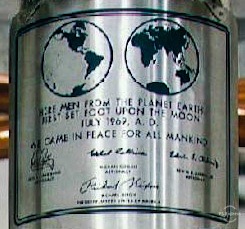
For All Mankind (a Steve Orr scripture reflection)

What if the Russians landed on the Moon before the US?

That’s the premise of Apple TV’s original series, For All Mankind. The show posits that one departure from our actual history, and it occurs in the first few minutes of the very first episode ... it changes everything. What happens, next, is stunning. First, they continue the Apollo rocket program well beyond what we actually did. In time, there are many changes: to the astronaut program, new faces, new leaders, new roles for women and people of color. Even different Presidents occupy the White House than in our reality.

But some things don’t change: like the need for spacecraft to dock with each other out in the void. It is a long, difficult, and highly structured process, even in our real timeline. It actually takes days to accomplish. At the end, it’s a matter of moving mere inches for excruciatingly slow periods of time.

We can observe this, now, when Astronauts attempt to dock with the International Space Station. It’s a long, complicated process, made even longer by the fact that at multiple points fresh permissions must be obtained before proceeding.

I think most of us believe getting to God works much the same way: full speed toward God; stop and wait; get more permissions; slow our approach; stop again; get even more permissions. And then, right when we think we have finally made it, jumped through all the hoops, we're told to wait ... Again.

We see ourselves as the rocket, expending all the energy to connect with God; and we see God as the International Space Station, floating majestically out in space, expending no energy at all, just awaiting our approach. But we have a fundamental misunderstanding about the ISS: we think it can't maneuver. On the contrary, it can maneuver; it just doesn't maneuver any more than is necessary. Any fuel it uses must be replaced (i.e., brought up from the Earth). Plus, at an expense of over $10,000 per pound of propellant, a single 180 degree maneuver costs more than $1,000,000 to execute. At that price, it's no surprise the maneuvering is usually left to the approaching craft.

God has no such limitations.

Nor does God expect us to "do all the work." The scriptures are clear on this, no matter whether you read the Old Testament or the New. James writes, "Draw near to God and God will draw near to you." Don't get the wrong idea, though; it's not a quid pro quo. Look at the father in the parable about the prodigal son: as soon as he sees his son "still a long way from home", he runs to his son, meeting him well down the road (Luke 15).

That is the spirit of the message in this week’s scriptures, especially Psalm 95 and the Gospel of John. God wants us. We are welcome. God is not waiting for us to execute a painstaking series of maneuvers in order to approach him. He is searching for us, looking down the road, ready to run to us at first sighting. God does this for all mankind, for all womankind, for all humankind.

Start your approach ... God will take care of the docking.


_________________________
PHOTO CREDIT for plaque first astronauts left on the moon (The plaque says: "Here men from the planet Earth first set foot upon the moon, July 1969 A.D. We came in peace for all mankind."): https://nasa.gov/

Different versions of this reflection have appeared in 2014 and 2017.

For more about docking with the International Space Station, link to:
http://www.howitworksdaily.com/docking-with-the-iss/
"Docking With The ISS"
How It Works Magazine

_________________________
READINGS FOR THE COMING WEEK
Third Sunday in Lent (March 15, 2020)
https://lectionary.library.vanderbilt.edu//texts.php?id=26

Exodus 17:1-7
Psalm 95
Romans 5:1-11
John 4:5-42
_________________________


You are welcome at DaySpring’s Friday morning Lectionary Breakfast. We gather at 8:00 at Our Breakfast Place (the former Egg and I restaurant) for an hour of great fellowship. We eat, we read and discuss scripture, and we laugh; truly an hour like no other.

Join us,
Steve