Saturday, May 29, 2021

Todd Rundgren: Rocker, Psalmist (a Steve Orr scripture reflection)

Todd Rundgren is being inducted into the Rock & Roll Hall of Fame this year. He’s in great company with the likes of Tina Turner, Carole King, Jay-Z, Foo Fighters, and The Go-Go’s. 

Do you know Todd? He’s a singer-songwriter, multi-instrumentalist, innovator, and producer. He’s been continuously at the top of the music scene since the early 1970's. He’s had hits in every decade, and you can find he has produced some of the greatest musicians in two different millennia. 

You may not know his history, but you’ve almost certainly heard his catchy tune, Bang the Drum All Day ("I don't wanna work! I just wanna bang on the drum all day!").

Today, though, I’m thinking about another aspect of Todd Rundgren: modern psalmist. I believe some of his music qualifies him for that. The joy of Hodja makes it a solid contender for a modern psalm; and I could make a strong case for Parallel Lines. There are many others. I leave it up to history and the experts to argue all that out.

The best of his psalms, though, one I doubt anyone would debate, is Mighty Love. It’s a great, thumping, toe-tapping piece of music. In it, Todd and crew contrast lesser love (romantic love; “Eros”) with a lasting, mighty love. The song recounts how the lesser love does not last —even though deeply sworn and strongly intended— because, as the song says, “that’s the way love goes.” But, you’re encouraged to “keep on looking, you’ll soon discover a mighty love.”

So, what is this "mighty love"?

The Bible uses phrases like “mighty waters,” “many waters,” “great waters,” and “deep waters” as a metaphor for serious trouble, overwhelming trouble; the kind of trouble you really can’t get out of by yourself, the kind of trouble that just might be the end of you. Mighty waters.

But there is a countering force to those mighty waters. 

Now, Todd Rundgren is not known as a “Christian” singer; you won’t find his music listed on any of the “Christian top 40.”  But, as with some other “secular” performers,** he sometimes enters deeply spiritual territory … if only we have the “ears to hear.”  

We can put on our spiritual ears and hear that Todd Rundgren’s “mighty love” is actually what the Greeks called “Agape.” You're promised if you “keep on loving, you’ll soon discover a mighty love.” It’s an unconditional love, one that always acts in someone’s best interest, one that lasts; or, as some have put it: “love, in spite of.”

God's love.

As Psalm 29 indicates: God is the master of the mighty waters. Since God is love, His mighty love Is greater than any troubles that come our way, even those "floods" that threaten to, and sometimes do, overwhelm us. 

What are you facing today? Mighty Waters? 

Keep on looking; keep on loving. You’ll soon discover a Mighty Love. 

_____________________________

**For example: The Pretenders on I’ll Stand By You, Anne Murray on You Needed Me, Josh Grogan on You Raise Me Up, Norman Greenbaum on Spirit in the Sky, and Carole King on Way Over Yonder.

GRAPHIC is an earlier logo of the Rock and Roll Hall of Fame. Here’s an article about the very first class of inductees: 

Mighty Love (lyrics below video): 

Rock History: Top Ten Todd Rundgren songs:

More about Todd Rundgren: 

_________________________
Join us for DaySpring’s next Lectionary Breakfast this Friday morning. Enjoy fellowship, scripture discussion, and some real joy. We gather on Zoom at 8:00. BYOBB (Bring your own breakfast beverage). 

Blessings,
Steve 

Contact me for the Zoom link

NOTE: Zoom allows you to mute the camera if you don’t wish to be seen and to mute the microphone if you don’t wish to speak.

SCRIPTURES FOR THE COMING WEEK

Find them here: 

Isaiah 6:1-8
Psalm 29
Romans 8:12-17
John 3:1-17

Saturday, May 22, 2021

See That Island Out There? (a Steve Orr scripture reflection)

I am a skeptic because of my father. Pretty sure that’s not what he was going for. Here is how we got there.

My hometown, the port of Paducah, Kentucky, is a busy one. Sitting at the confluence of the Ohio and Tennessee Rivers, the town, like so many river towns, owes it's very existence to these rivers. Everything orients on the rivers. For a time, my Dad, like many others, worked on the river. Dad worked the 30-30; that is, 30 days on the river and 30 days off. So, every other month, he either spent the month at home or away working on a tug.


On one of those getting on or getting off occasions, Dad pointed out across the river to what I later came to know was Owens Island, and said, "You see that Island out there? That's the island Mark Twain had Huck and Jim hide out on." From that moment on, it was an article of faith that Owens Island was the physical reality put to good use by Mr. Clemens in his classic novel, Huck Finn.


I told people (so many people) that tidbit for … oh, about a decade; told them that with confidence. I did so regularly ... until that day my Senior Year, in the Paducah Tilghman High School Library, when my friend Bruce brought it all crashing down. After being unable to convince me that I was mistaken in my understanding about Owens Island, Bruce led me into the Library where he spun the globe so we could look at the United States. He pointed to the Mississippi River. He then asked me if that was the river on which Huck and Jim had all their adventures. I agreed it was.


Moving his finger slightly to the right, he then located Paducah and asked the names of those two rivers. Of course I knew they were the Tennessee and the Ohio. I then saw where this was going and I quickly pointed out that Owens Island could still be the island in the book because Huck and Jim traveled down river as they fled.


Spinning the globe up so that we were looking directly down on the area including all three rivers, he pointed to where the two rivers which fronted our hometown ran a few miles further South to join up with the Mississippi. Suddenly I saw it. There was never anything clearer. Owens Island could not be the island from the book. Huck and Jim floated down the Mississippi, and could never have come back up North to Owens Island. 


Dad had not told me the truth.


And that is how I came to learn my father liked to tell tales. He didn't mean anything bad by doing so. It was all just a bit of fun to him to exercise his imagination. The problem, of course, was that, until confronted, he never let on. After that, I was no longer quite so naive about the things Dad told me. I usually sought verification from other, more dependable, sources; Mama or Granny. And, to be fair to Dad, I also learned to be a little skeptical about things in general; no longer just accepting everything on face value, but applying a little scrutiny when anything seemed not quite right. So, in the long run, I concede the experience had a positive result.


It also explains why I completely understand the skepticism expressed in this week’s Acts 2 passage about Pentecost. Upon encountering the cacophony of disciples speaking many languages all at once, the sneering doubters were, perhaps, quite right to be skeptical. They came to see what the fuss was all about and found several people speaking what seemed for the most part to be gibberish. It's no surprise to me they thought the speakers were drunk. 


Picture it: these people are all speaking at the same time, each in a different language. To the average hearer, only one of the speakers would be making sense, the one speaking their language; the rest would be an oral jumble of non-intelligible sounds all piled on top of one another.


And here is the point: it's OK to be a bit skeptical in unusual situations. If it is a real miracle, God will make it plain all on his own, just as He did at Pentecost. 


Trust me.


_________________________

PHOTO CREDIT: 

https://maptic.tumblr.com/post/41943424970/jacksons-island-adventures-of-huckleberry-finn


_________________________

DaySpring’s next Lectionary Breakfast is this Friday morning. We’ll enjoy some fellowship, a discussion of scripture, and some (possibly inappropriate) laughter. Join us on Zoom at 8:00. Bring your own breakfast. 


Blessings,
Steve 

Contact me for the Zoom link

NOTE: Zoom allows you to mute the camera if you don’t wish to be seen and to mute the microphone if you don’t wish to speak.

SCRIPTURES FOR THE COMING WEEK

Found them here: 

https://lectionary.library.vanderbilt.edu//texts.php?id=94


Day of Pentecost (May 23, 2021)

Acts 2:1-21 or Ezekiel 37:1-14

Psalm 104:24-34, 35b

Romans 8:22-27 or Acts 2:1-21

John 15:26-27; 16:4b-15


_________________________

Friday, May 14, 2021

The Value of the Coach (a Steve Orr scripture reflection)

I was never an athlete. And it wasn’t just a lifestyle choice. I was horrible at anything athletic.  

The closest I came to team sports was one brief summer in Little League. That was a disaster; couldn't hit, couldn't run, couldn't pay attention.  And my situation wasn't for lack of others trying. I had older cousins who tried to teach me how to hold the bat without choking up, how to run from base to base, how to catch, and how to slide. I actually got pretty good at sliding. But the rest of it ... well.

That left the dreaded Phys-Ed.  

Starting in the 7th Grade, we spent a portion of every other school day doing a 40 minute version of whatever sport was in season. In the fall, we played football in PE (didn’t understand the rules, then, so I was always a Lineman). In the winter, we played basketball (couldn't move and dribble; terrible shooter). On rainy days, we played dodgeball (big and slow, easy target). In the spring, we played baseball (see above) or track & field (still hate this).  

The rest of the time, we were subjected to a torture called "conditioning." I hated it all: sit-ups, chin-ups, rope climbs, push-ups, running up and down the bleachers. Imitating sports wasn't so bad: you got knocked down, you got up, you got knocked down again; simple. Exercising just to exercise? Madness.

Many of my friends from those years (all of us "back of the pack-ers"), would be shocked to see me these last few years. I joined a gym, hired a trainer, and actually paid someone to lead me in the very physical conditioning activities I hated in PE class.

Why do this? In short: there were things I wanted to do —improve my health, lose weight, shape up— and I needed a coach’s insight to ensure I reached my goals. When I read this week's scriptures, I see a parallel between my time at the gym and the Luke and Acts passages.

When I’m working out, I’m only focused on the moment. My coach, though, is thinking about all of it: where I've been; what I'm doing right then; how that activity moves me toward my objectives; and, of course, what's next. 

It's kind of like that for the Apostles in those scriptures. They are told to expect someone who will serve as teacher and guide, someone who will help them achieve the goals set before them. They didn't know what was coming. But they believed the one who told them a helper would come. And they acted from within that belief.

Though I am no longer a gym rat, I still work out. And when I’m nearing the end of my treadmill time —and fading— I am encouraged by the calm voices of my trainers from over the years: "You can do this. Just a bit more. Almost there." They knew what I was capable of; knew how much more I could bring to the task; knew how much more would be required of me before I could rest.  

The Spirit is like that with us on our spiritual journey. When the going gets hard, we need to listen for that voice deep inside: 

"You can do this. Just a bit more. Almost there."

_________________________
PHOTO: the author in full Little League regalia, circa 1959.

_________________________
Rise up Friday morning and join us for DaySpring’s Lectionary Breakfast. We gather on Zoom at 8:00 for an hour of Bible discussion, fellowship, and laughter.  

Blessings,
Steve 

Contact me for the Zoom link.

NOTE: Zoom allows you to mute the camera if you don’t wish to be seen and to mute the microphone if you don’t wish to speak.

SCRIPTURES FOR THE COMING WEEK
Find them here: 

Acts 1:1-11
Psalm 47 or Psalm 93
Ephesians 1:15-23
Luke 24:44-53
Ascension of the Lord (May 13, 2021)


Friday, May 7, 2021

The Second Person to Walk on the Moon (a Steve Orr scripture reflection)

Quick. Can you name the second person to walk on the moon? 

People can usually name Neil Armstrong as the first person to walk on the moon. After that, for most of us, it gets a bit fuzzy. Oh, sure, we can Google the answer in a few seconds ... but that’s not the point of this exercise.

So many leadership and management classes, self-help recordings, sales seminars, etc., started with some version of that question. 

“Do you remember who was the second ...?”

Attendees might be allowed to discuss it for a while, but people usually couldn't come up with the answer. It turned out, though, that coming up with the right answer was never the point. Eventually, the leader revealed the secret of the exercise: the answer didn’t matter. 

No one cared who was second. All that mattered was who was first. 

It’s a pernicious kind of thinking. It belongs to the same divisive, manipulative, and deceptive motivational claptrap as the 110% lie. It’s the idea that whatever is first has more value and whatever is not first is somehow less than. 

Let’s pause here and be clear: people who excel are worthy of praise and reward. But, someone is always going to be second ... and third ... and last. Are these people —who competed and tried their best— to be disdained just because they didn’t come in first?

This week’s scriptures ask us to trust: that God only asks us to love one another, to follow the commandments, and that God will ensure the victory. Our faith, love, and obedience are our only “contributions.” 

We are not competing to be the best Christian, to be “first” in faith, love, and obedience. Giving 110% doesn't ensure the victory. It’s not that God doesn’t ask us to do things in the Kingdom; it’s just not a competition. Loving, serving, obeying, and trusting in God are actions all of us can perform.

We don’t need to know who comes in second because we don’t need to know who comes in first. In the Kingdom, none of those things matter. 

________________________
Will you be with us Friday morning for DaySpring’s Lectionary Breakfast? Join us at 8:00 on Zoom for a great hour of fellowship, scriptures, and discussion. 

Blessings,
Steve 

Contact me for the Zoom link.

NOTE: Zoom allows you to mute the camera if you don’t wish to be seen and to mute the microphone if you don’t wish to speak.

SCRIPTURES FOR THE COMING WEEK
Read them here:

Sixth Sunday of Easter (May 9, 2021)
Acts 10:44-48
Psalm 98
1 John 5:1-6
John 15:9-17

Saturday, May 1, 2021

Wardrobes, Wrinkles, and Wormholes (a Steve Orr scripture reflection)

I remember my first wormhole.

Do you remember yours? Was it The Lion, the Witch, and the Wardrobe by CS Lewis? Maybe A Wrinkle in Time by Madeleine L’Engle? Long before I read either of those wonderful books, though, I encountered my first wormhole in a more traditional sci-fi novel: Robert A. Heinlein’s Tunnel in the Sky. 

What’s a wormhole? Einstein would call it a space-time bridge. For Lewis, it was a way through a magical wardrobe from a British country estate to the Land of Narnia. L’Engle used a tesseract to move children from one side of the universe to the other. Stephen King calls it a thinny. Heinlein called it a gate. Online Gamers would likely say portal (That’s also how Native Americans thought of it). 

However you term it, the definition is the same: a kind of doorway leading from one place to somewhere that’s usually far, far away. This kind of “travel” is often called teleportation.**

But, these are all fictional ... right? So, what does it really matter? 

Well, it turns out scientist believe they have, indeed, teleported something from one place to another. Mind you, it was just a particle (so nothing as complex as, say, Schrödinger's cat). Plus, there is some debate about whether the particle actually went anywhere. One theory suggests what really happened was that the process disintegrated the particle, sent only the information about the particle ... and then made a new, identical particle at the other location. 

Whatever it was that happened in that lab, something very similar happened in this week's Acts 8 scripture. God used the apostle Philip to lead the Ethiopian Eunuch to belief in Jesus as the Messiah (Christ) and then teleported Philip to Azotus (about 30 miles away). 

Now, you might pooh pooh my belief that God used teleportation to move Philip from one place to another. Let me know if you can find another answer. To me, it looks like God needed Philip elsewhere on short notice. And it reads like Philip experienced it, too.

When they came up out of the water, the Spirit of the Lord snatched Philip away; the eunuch saw him no more, and went on his way rejoicing. But Philip found himself at Azotus, and as he was passing through the region, he proclaimed the good news to all the towns until he came to Caesarea. Acts 8:39-40

So, was it teleportation? Did God send Philip through wormhole?

I don’t know. There’s no reason that can’t be the explanation. But, that’s not the point of the tale, is it? I think the takeaway is something else, entirely; something found in the “bookends” of the story. It begins with God sending Philip to proclaim the good news to someone. And how does it end? Apparently unaffected by his miraculous journey to Azotus, Philip just heads north and keeps on telling folks the good news about Jesus. 

And isn't that always the point?


_________________________
** “the transfer of matter from one point to another without traversing the physical space between them”


Deeper Dive - Teleportation in the Bible:

Even Deeper:

_________________________

We are deep into the Season of Easter and are enjoying our time to discuss the related scriptures. Join us Friday morning at 8:00 on Zoom for DaySpring’s Lectionary Breakfast. It’s truly an hour like no other.

Blessings,
Steve 

Contact me for the Zoom link

NOTE: Zoom allows you to mute the camera if you don’t wish to be seen and to mute the microphone if you don’t wish to speak.

SCRIPTURES FOR THE COMING WEEK
Find them here:

Fifth Sunday of Easter (May 2, 2021)
Acts 8:26-40
Psalm 22:25-31
1 John 4:7-21
John 15:1-8

Saturday, April 24, 2021

Stephen King and the Not-Good Shepherds (a Steve Orr scripture reflection)

Stephen King creates some very intriguing characters. Most are captivating, drawing us ever deeper into his tales. Perhaps surprisingly, it is his lesser characters that often capture our interests and imagination. Consider King’s  “low men.” 


These low men usually show up to perform distinct, limited —almost always bad— actions. Then, fairly quickly, they move off the stage. They’re pretty horrible. In their true form, they appear as rat-like humanoids, complete with fleas, lice, and, sometimes, rabies. They dress in garishly colored, out-of-fashion clothing, and they drive what appear to be vintage cars —but might actually be something else, entirely. 

There is no question as to how King wants his readers to regard these creatures. 

If having the heads of rats isn’t frightening enough, the fact that they walk among us on two legs just ratchets up the creep factor. And in every scene, we always have the sense that things are about to go from bad to worse.

We don’t need fiction, though, to think of similar folk. We’ve all met some, haven’t we?

This week’s scriptures are all connected to the actions of shepherds. In the Gospel of John, Jesus contrasts himself (“the good shepherd”) with those who, by their acts of low character, have proved themselves to be not-good shepherds. Of those real life “low men,” He says that when “wolves” threaten the sheep, the not-good shepherds will run away and leave the sheep to the wolves. The result? Some of the sheep are “snatched” by the wolves, which will surely lead to their deaths. Others “scatter” in fear for their lives.

He says the not-good shepherd “runs away” because the not-good shepherd “does not care for the sheep.” By contrast, Jesus tells us that the good shepherd will do all he can to protect and save the sheep, even going so far as to lay down his own life for them. We are the sheep in this illustration and those claiming to be our spiritual leaders are the shepherds. 

The point: Jesus wanted everyone to understand that the measure of whether a shepherd is good or not-good is based on what the shepherd does for the sheep. Most importantly, He wanted us to know that everyone has a choice, Himself included. 

The main reason that King’s “low men” are the way they are is because of what they are. As King’s creation, they have no real choice to be anything other than low. By contrast, Jesus did not lay down his life for us because it was destined. He had the power and authority to choose.

He chose that because He is the good shepherd.

_________________________


Join us Friday morning when we, once again, discuss this week’s scriptures. DaySpring’s Lectionary Breakfast meets at 8:00 on Zoom.

All are welcome.

Blessings,
Steve

Contact me for the Zoom link.

NOTE: Zoom allows you to mute the camera if you don’t wish to be seen and to mute the microphone if you don’t wish to speak.

SCRIPTURES FOR THE COMING WEEK
Find them here: 

Acts 4:5-12
Psalm 23
1 John 3:16-24
John 10:11-18
Fourth Sunday of Easter (April 25, 2021)


Friday, April 16, 2021

A Fable Inspired by Sin (a Steve Orr scripture reflection)

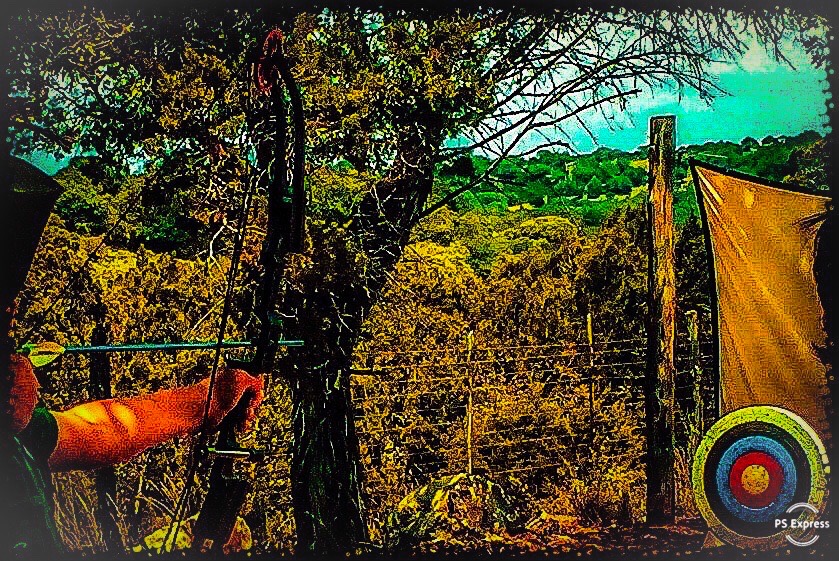
A few years ago, I wrote a short fable to illustrate this week’s 1st John selection. It was based on the idea that the word “sin” is also an archery term meaning to “fall short” of the target or bullseye. 

Here’s the fable and the scripture is just below it.

Two Archers Meet in a Wood
An archer, dressed in brown, entered a vast Wood from the east. Another archer, dressed in green, entered the Wood from the west. The brown archer strode purposefully. He clearly had a destination in mind. The green archer ambled a bit, taking in the beauty of the Wood. 

Each moved on a path that brought them to the center of the Wood. At last, they saw each other and stopped. For a few seconds each just looked at the other. 

Finally, the brown archer said, "Hello friend. I see you, too, have come to use the King's archery range."

The green archer appeared surprised, looked about, and, for the first time, took notice of the targets off to the north. But, the brown archer missed this reaction, already setting up his gear for the shoot. 

The green archer said, "So, this is the King's range?"

"Oh yes!" replied the brown archer. "Do you not know? The King has set aside the whole of His Wood for the pleasure of His subjects. And he encourages us to use the range to improve our targeting."

The brown archer then nocked his first arrow, drew back, eyed the target, and let fly. The arrow flew swiftly across the vast clearing toward one of the targets. At first, the arrow was on course, but at the very last it appeared to lose speed. When it finally struck the target, the arrow rested well below the bullseye. 

"Sin!" cried the green archer, a bright grin splitting his face. He was suddenly awakened to the fun he might have here. 

Selecting an arrow from his quiver, the green archer quickly nocked it, drew deeply on the bow, and released. In no time, a loud "THUNK" heralded the arrow's arrival across the clearing. But it was not on the target. It wasn't even in the hay bales backing the targets. The brown archer finally saw it, buried to the fletching in a hollow tree.

"Miss," said the brown archer. 

"At least it didn't fall short like yours!" crowed the green archer. Then, he grabbed another arrow, set it to string, and pulled even farther back before releasing. This arrow flew even faster than the first, slicing past the targets, over the bales, past the nearby trees, and off into the forest. No sound of its landing was heard.

The brown archer watched, frozen, as the green archer lofted a third arrow high and to the left; a fourth high and to the right; then, turned and sent one through the woods behind them. Finally, shaken from his shock, the brown archer, cried, "What are you doing? You're not even trying to hit the target!"

"Of course not," replied the green archer. "How boring! The fun is in not aiming for the target! I so enjoy the feel of flinging the arrows off at top speed, the flexing of my muscles, and that sense of power! I really don't want to fuss with all that aiming."

The brown archer had heard enough. "Don't you realize there are others in the King's Wood? Your wild arrows could easily hit someone, could maim or kill. We come here so we can practice our aim. This clearing is set up for just that exercise. That's why there are targets. Certainly the King knows we will not always hit the bullseye. I tally many a sin because I am plagued with a weak pull; my arrow often falls short. But no one, not even the worst archer, comes here intending sin. And we never act in a way that might endanger others."

The green archer, not liking this lecture, was no longer enjoying himself. He spoke petulantly, "Well, you’re no fun." Gathering up his gear, he stalked away, continuing his original journey.

The brown archer watched the other bowman disappear to the east. He stood that way for a while, thinking of the wild abandon with which the other had launched his missiles, recalling when he, too, had been the thoughtless archer. Finally, he selected an arrow from his quiver, nocked it along the string, pulled deeply on the bow, eyed the target for a long while ...

And then let fly.

________________________________

"All who indulge in a sinful life are dangerously lawless, for sin is a major disruption of God’s order. Surely you know that Christ showed up in order to get rid of sin. There is no sin in him, and sin is not part of his program. No one who lives deeply in Christ makes a practice of sin. None of those who do practice sin have taken a good look at Christ. They’ve got him all backward.

So, my dear children, don’t let anyone divert you from the truth. It’s the person who acts right who is right, just as we see it lived out in our righteous Messiah. Those who make a practice of sin are straight from the Devil, the pioneer in the practice of sin. The Son of God entered the scene to abolish the Devil’s ways." (‭1 John‬ ‭3‬:‭4-8‬ The Message)

________________________
PHOTO: Steve Orr


DaySpring’s Friday morning Lectionary Breakfasts are a true pleasure. Join us on Zoom at 8:00. We enjoy the treasures the King has shared with us, luxuriating in each other's company, and tasting the Word to see that it is good.

Contact me for the Zoom link.

NOTE: Zoom allows you to mute the camera if you don’t wish to be seen and to mute the microphone if you don’t wish to speak.

Enjoy the week!
Steve

SCRIPTURES FOR THE COMING WEEK
Third Sunday of Easter (April 18, 2021)
Find them here:

Acts 3:12-19
Psalm 4
1 John 3:1-7
Luke 24:36b-48